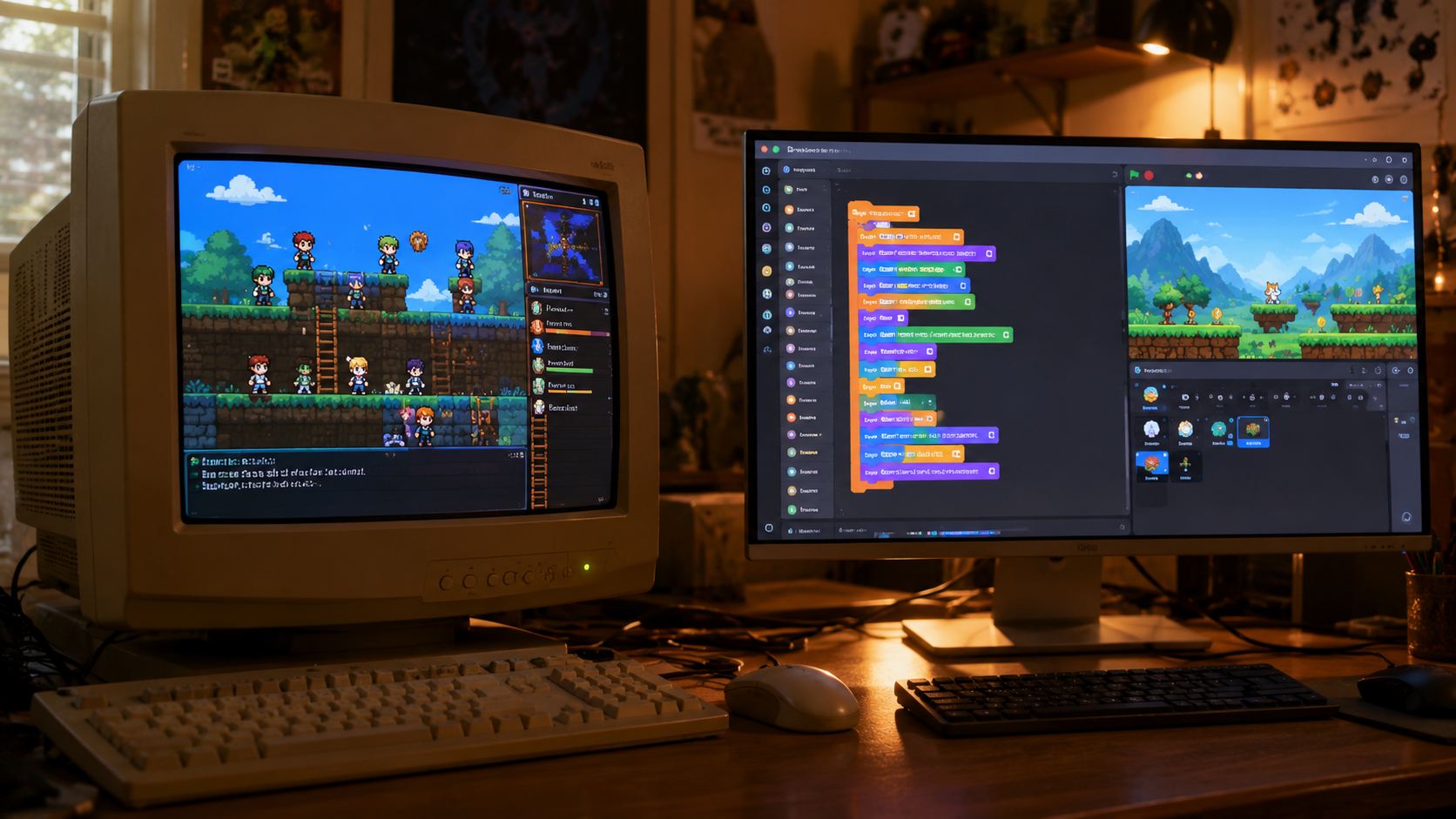
The Intersection of Play and Coding: Inside the Networked World of RAPUNSEL

What happens when you turn programming into a multiplayer game? Long before Minecraft or Roblox became classroom staples, researchers were exploring this question through RAPUNSEL. The environment was designed as a networked virtual world where players could interact with each other and their surroundings. To participate, players had to use code as their main tool of interaction, turning the game into a sandbox for creative logic.
The core mechanic of the game was simple yet deep. If a player wanted their avatar to perform a custom action, like a unique dance or a secret greeting, they had to write a snippet of Java code. Because the world was networked, other players could see the result immediately. This created a natural feedback loop. If someone saw a cool animation, they could ask for the code, tweak it, and write their own version. This copy-paste-modify cycle mimics how professional programmers learn and collaborate in the real world.
By grounding Java programming in social rewards, the project made coding feel intuitive. Kids were not coding for grades; they were coding to express themselves and fit into a community. This shift from individual puzzle-solving to collaborative creation proved that social spaces are fertile ground for technological education.